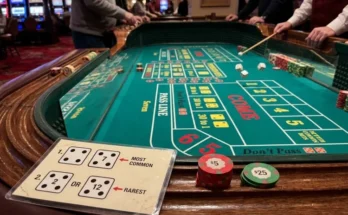
A betting board filled with numbers, dice combinations, and payout figures can look intimidating at first. Fortunately, the basic game is much simpler than its colorful layout suggests.
Three standard dice are shaken, and players predict which numbers, totals, or combinations will appear. Sic Bo is entirely a game of chance, so players cannot control the result through strategy.
The practical skill is understanding what each betting area represents and checking the paytable before risking money. This guide covers the normal round, the most common wagers, and typical payouts in straightforward language.
How a Round Works
Players place one or more wagers before the dealer or electronic terminal announces that betting is closed. The dice are then shaken inside a tumbler, and the numbers on their upper faces determine the result.
Winning bets are settled according to the displayed paytable. Regulated rules may also specify that a roll is invalid when the dice fail to land flat or when the shaker malfunctions.
Understanding Big and Small
Small wins when the three dice total between 4 and 10. Big covers totals from 11 to 17. Both commonly pay 1 to 1, also known as even money.
A $5 winning wager at 1 to 1 earns $5 in profit, while the original $5 stake is returned. However, Big and Small normally lose whenever the result is a triple.
For example, 3-3-3 adds up to 9, which would ordinarily fall within the Small range. Because the dice form a triple, the Small wager still loses.
Odd and Even Bets
Some table layouts also offer Odd and Even. Odd wins when the total is an odd number, while Even wins when it is even.
These bets usually pay 1 to 1 and lose on any triple, following a similar structure to Big and Small. They are not offered on every version, so players should check the game’s help screen before placing a wager.
Betting on an Exact Total
An exact-total bet predicts the combined value of all three dice. Players can normally choose a number between 4 and 17.
Common totals have lower payouts because more dice combinations can produce them. Rare totals offer larger returns. On one Australian schedule, a total of 10 or 11 pays 6 to 1, while a total of 4 or 17 pays 62 to 1.
Those figures are examples, not universal rules. Another regulated schedule lists 4 and 17 at 50 to 1, showing why the current table must always be checked.
Single Numbers and Combinations
A Single Number bet predicts that at least one die will display a selected face. Choosing four, for example, wins when one or more dice show four.
One published paytable returns 1 to 1 for one match, 2 to 1 for two matches, and 12 to 1 when all three dice display the selected number. Other versions may use a smaller payout for the third match.
A Two-Dice Combination predicts two different values, such as two and five, appearing somewhere among the dice. Depending on the rules, this wager may pay 5 to 1 or 6 to 1.
Doubles and Triples
A Specific Double predicts that at least two dice will show the chosen number. A wager on double six, for instance, wins when two or three sixes appear.
A Specific Triple is much narrower because all three dice must show one selected value. An Any Triple wager covers all six matching results, from 1-1-1 through 6-6-6.
Published payouts vary considerably. Some tables offer 150 to 1 for a Specific Triple, while others offer 180 to 1 or 195 to 1.
Read “To 1” Correctly
A payout of 10 to 1 usually describes the profit on a winning wager. A $2 bet at 10 to 1 therefore earns $20 in profit, with the original $2 returned separately.
Digital games may instead show a total-return multiplier. Read the paytable carefully to determine whether the displayed number includes the original stake.
Sic Bo becomes easier when its table is separated into clear categories. Big, Small, Odd, and Even cover broad outcomes, while totals, combinations, doubles, and triples require more specific results.
Before wagering, review the rules and compare the displayed payouts with the examples above. Start with small stakes, establish a firm entertainment budget, and remember that larger prizes normally correspond with less frequent wins.
Play only through legal, licensed services, and stop when the activity is no longer affordable, enjoyable, or controlled.