


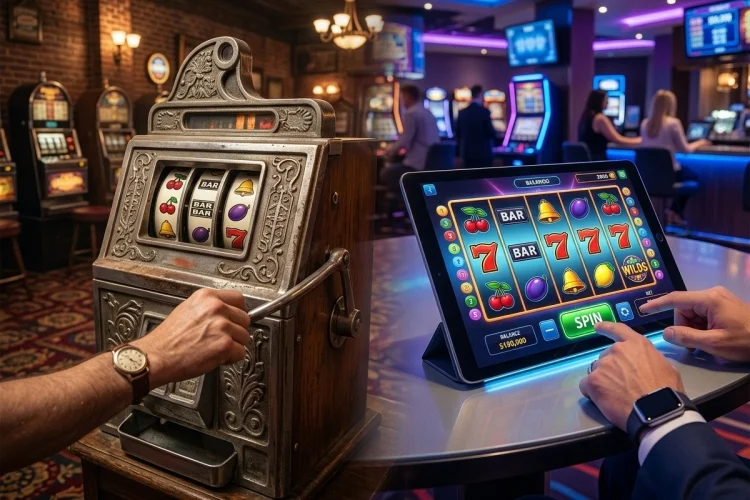
Pulling a metal lever once set real reels turning inside a heavy casino cabinet. Today, a player can create the same familiar spinning motion by tapping a phone screen.
The pictures may still include cherries, lemons, plums, bells, and BARs, but nearly everything behind them has changed. Modern Fruit Slots are software products rather than simple mechanical devices.
Virtual reels can contain many symbol positions, payouts are credited automatically, and an RNG generates results. Developers can also include free spins, wilds, or several betting lines without abandoning the traditional appearance.
To understand how the classic format became digital, it helps to separate what players see from the technology calculating each round.
The Original Three-Reel Layout
The three-reel machine became a basic template for slot design during the early mechanical era. Charles Fey’s Liberty Bell used three physical reels and an automatic payout mechanism, helping establish a format later copied by other manufacturers.
Traditional games normally displayed a small set of symbols and one central payline. A combination had to stop directly across that line to qualify for a prize.
This limited layout made the rules easy to follow. Players could quickly see which symbols matched without checking complex bonus panels or multiple reel directions.
Physical Reels Became Virtual Reels
A mechanical reel can hold only a practical number of printed symbols. A digital reel exists in software, so its internal structure does not have to match the small collection of pictures visible on screen.
The animation creates the appearance of spinning strips, but it mainly communicates the outcome to the player. The game’s mathematical model determines how often each result can occur.
This change gave developers greater control over payout distributions and feature design. They could keep a classic three-reel presentation while using a much larger set of possible outcomes behind it.
RNG Software Selects the Outcome
Modern online games generally rely on random number generator technology. The RNG continually or repeatedly produces values, and the game software maps the relevant value to a reel result.
The UK Gambling Commission states that gaming-machine outcomes may be produced through random or compensated software, depending on the regulated machine type. Remote online games are subject to separate technical standards and testing requirements.
A genuine licensed game should not wait to see whether the player has recently won or lost before deciding the next random result.
Paylines Became More Flexible
Classic fruit machines were strongly associated with one or only a few paylines. Digital designs can add horizontal, diagonal, or zigzag patterns without changing the physical cabinet.
Some modern versions keep the old single-line style. Others offer ten, twenty, forty, or more ways to create winning combinations.
More lines do not automatically improve the chance of earning a profit. Activating additional lines usually increases the total amount wagered per spin unless the value assigned to each line is reduced.
RTP and Volatility Explain the Mathematics
Return to Player, commonly shortened to RTP, is the theoretical percentage of total stakes a game is designed to return over extensive play. It is not a promise for one player or one short session.
The UK Gambling Commission explains that actual RTP is calculated by dividing total wins by total turnover. It also notes that volatility affects how widely short-term results may differ from the theoretical average.
A game with simple fruit graphics can still be highly volatile. Never judge the mathematical risk from the visual design alone.
Bonus Features Modernized the Format
Digital technology allowed designers to move beyond ordinary matching symbols. A wild may replace selected icons, a scatter can trigger free spins, and a multiplier can increase the value of a winning combination.
Some products remain intentionally basic. IGT describes its fruit-game category as focusing on simple, classic designs with fewer paylines, while also advertising updated graphics and new mechanics within the wider collection.
This creates a broad spectrum, from nearly exact recreations of old machines to modern video slots wearing a retro theme.
Mobile Design Made the Games Portable
A small reel grid fits naturally on a phone screen. The spin button, stake controls, balance, and paytable can be arranged around three or five compact reels.
HTML-based casino software also lets games run through mobile browsers without reproducing a physical cabinet. Sound, animation, and touch controls replace the lever and coin tray.
Portability increases convenience, but it can also make impulsive sessions easier. Account limits and session reminders should be set before playing rather than after spending becomes uncomfortable.
The digital transformation of Fruit Slots changed the machinery but preserved the recognizable experience.
Physical strips became virtual reels, coins became account credits, and mechanical stops became RNG-generated results. Digital technology also introduced flexible paylines, richer animations, wild symbols, and bonus rounds.
Before choosing a game, read the complete paytable instead of relying on its familiar appearance. Check how many lines are active, whether the displayed stake is per line or per spin, and how free-spin features work.
Use a licensed platform, establish a fixed spending limit, and treat every spin as paid entertainment rather than a dependable way to make money.
